
Amid rising geopolitical tensions in the Middle East and growing concerns over disruptions in global energy supply chains, Haryana Chief Minister Nayab Singh Saini has moved to reassure citizens that the state faces no shortage of essential petroleum products, including petrol, diesel, and domestic cooking gas. Addressing a press conference in Chandigarh, the Chief Minister emphasized that the supply situation remains stable and urged the public to avoid panic-driven purchases that could unnecessarily strain the system.
Saini’s remarks come at a time when international developments, particularly around critical maritime routes such as the Strait of Hormuz, have triggered global anxiety over energy supplies. However, the Haryana government has sought to firmly counter any perception of scarcity, stating that both the Centre and the state administration are closely monitoring the situation and ensuring uninterrupted supply chains.
The Chief Minister categorically dismissed rumours of shortages, attributing them to misinformation being circulated by certain elements. He warned that strict action would be taken against individuals or groups found engaging in black marketing or hoarding of fuel and LPG cylinders. According to him, enforcement agencies have already intensified surveillance and action, with seizures of LPG cylinders, vehicles, and the registration of multiple cases against offenders in recent days. This crackdown reflects the government’s attempt to maintain market discipline and prevent artificial inflation of demand.
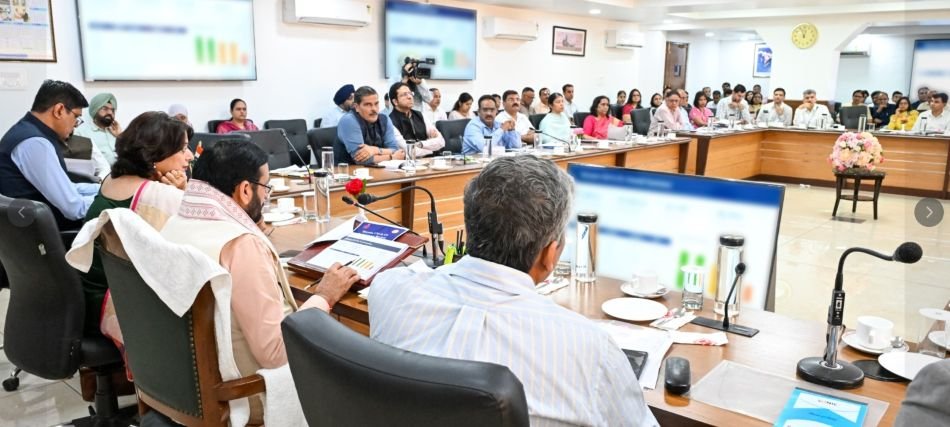
Highlighting administrative preparedness, Saini revealed that he has personally reviewed supply arrangements with oil marketing companies. The state currently operates over 4,000 fuel stations, which collectively handle thousands of kilolitres of petrol and diesel daily. Supply logistics have been further strengthened through increased terminal operations, faster dispatch mechanisms, and prioritised morning deliveries to ensure seamless distribution across urban and rural regions.
On the domestic front, the availability of cooking gas remains robust. Haryana is receiving approximately two lakh LPG cylinders daily, with distribution closely matching demand. Adequate stock levels are being maintained at bottling plants, and structured refill cycles—25 days in urban areas and 45 days in rural regions—are being strictly followed. The government has also ensured uninterrupted supply to essential institutions such as hospitals and schools, reflecting a calibrated approach to resource allocation during uncertain times.
Saini also acknowledged the role of the Union Government under Prime Minister Narendra Modi, particularly highlighting the recent reduction in excise duties on petroleum products. He noted that this step has helped stabilize fuel prices and shield consumers from global price volatility. The Chief Minister reiterated that India’s policy of prioritizing national interest has proven effective in navigating previous crises, including the COVID-19 pandemic and international conflicts.
Beyond immediate supply assurances, the Haryana government is also accelerating its long-term transition towards cleaner and more sustainable energy systems. In a significant policy shift, the state has drastically reduced the lease rent for laying PNG (Piped Natural Gas) pipelines, from a high upfront cost to a nominal one-time fee. This move is expected to encourage infrastructure expansion and reduce dependency on LPG over time.
Currently, Haryana has an extensive gas pipeline network spanning over 28,000 kilometres, with ambitious targets set to expand domestic PNG connections to over 1.3 million households. More than half of these connections have already been installed, and the government aims to double the pace of expansion in the coming months. Parallel growth in CNG infrastructure is also underway, with hundreds of stations operational and additional districts being integrated into the network.
To further enhance crisis management capabilities, the state has established dedicated control rooms at both state and district levels. These “war rooms,” led by senior administrative officials, are tasked with real-time monitoring of supply conditions, grievance redressal, and coordination with central agencies. Increased police patrolling in sensitive areas and strict action against rumour-mongering are also part of the broader strategy to maintain public confidence.
Saini concluded with an appeal for public cooperation, urging citizens to act responsibly and not fall prey to misinformation. He stressed that maintaining calm and avoiding unnecessary stockpiling is essential to ensuring that the supply system functions efficiently for everyone. At the same time, he called on political opponents to refrain from spreading panic during a sensitive period, asserting that collective responsibility is crucial in times of global uncertainty.
The Haryana government’s response reflects a blend of immediate crisis management and long-term energy planning. By combining strict enforcement with public communication and infrastructure expansion, the administration aims to navigate external shocks while maintaining internal stability.