
The inauguration of the State-Level Haroli Festival 2026 in Una district by Sukhvinder Singh Sukhu has unfolded as more than a cultural celebration, emerging as a strategic platform where heritage, governance, and political signaling converged ahead of a gradually intensifying electoral climate in Himachal Pradesh.
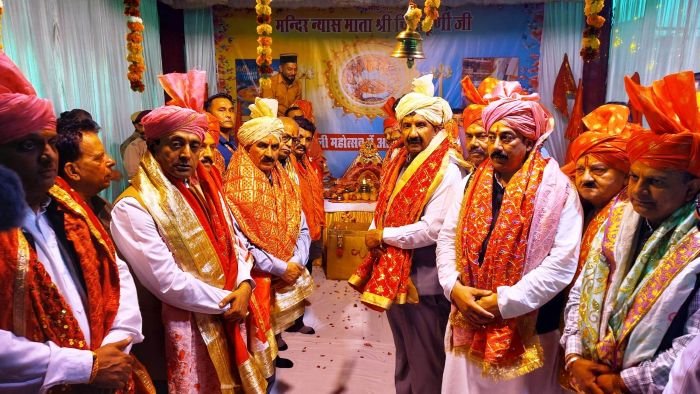
Held in Haroli, the festival opened with a vibrant display of tradition and community participation, symbolising the spirit of Baisakhi and the deep-rooted cultural ethos of the hill state. The Chief Minister began the occasion on a spiritual note by offering prayers at the sacred flame of Chintpurni Temple, seeking peace and prosperity for the people—an act that carried both religious and cultural resonance in a region where faith and governance often intersect in public life.
Participating in the traditional procession that followed, Sukhu joined hundreds of locals as folk performances, regional attire, and cultural tableaux reflected the diversity and vibrancy of Himachal’s heritage. The turnout and enthusiasm underscored the continuing relevance of such festivals in reinforcing community identity, especially in rural and semi-urban constituencies that play a decisive role in state elections.
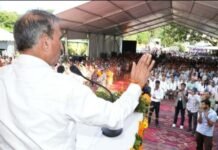
Addressing the gathering during the inaugural cultural evening, the Chief Minister emphasized that festivals like Haroli are not merely celebratory events but vital expressions of unity, shared values, and social cohesion. He framed cultural preservation as a key pillar of governance, suggesting that the state’s development narrative must remain rooted in its traditions even as it pursues modernisation. This positioning aligns with a broader political effort to connect governance initiatives with local identity, a theme increasingly visible in Himachal’s political discourse.
Sukhu also publicly acknowledged the role of Mukesh Agnihotri and the district administration in organizing the festival, a gesture that reflected both administrative coordination and internal political cohesion within the ruling establishment. Agnihotri, addressing the gathering, reiterated the government’s commitment to inclusive development, linking cultural platforms like the Haroli Festival to broader goals of social harmony and participatory governance.
Observers note that such events, while rooted in tradition, often serve as subtle instruments of political outreach. With elections not far on the horizon, public festivals offer leaders an opportunity to engage directly with citizens, reinforce their presence, and project an image of accessibility and cultural alignment. The Haroli Festival, in this context, becomes a stage where governance narratives are communicated not through policy announcements alone, but through symbolism, participation, and public connection.
The cultural evening itself added a contemporary dimension to the traditional setting. Popular Punjabi artist Gippy Grewal delivered an energetic performance that drew large crowds and infused the festival with a youthful and celebratory spirit. The earlier performance by the Abhigya Band further set the tone, blending modern musical elements with regional cultural expression, thereby broadening the festival’s appeal across generations.
The presence of several political leaders and public representatives, including MLAs and former ministers, highlighted the event’s significance beyond its cultural framework. Their participation reinforced the festival’s role as a convergence point for governance, administration, and grassroots engagement.
At a time when political narratives in Himachal Pradesh are increasingly shaped by debates over development, resource allocation, and Centre-state relations, events like the Haroli Festival allow the ruling leadership to shift focus momentarily toward cultural pride and social unity. Yet, the underlying messaging remains clear—development and identity are being positioned as complementary, not competing, priorities.
As the festival unfolds over the coming days, it is expected to continue drawing crowds from across the region, serving both as a celebration of Himachal’s heritage and as a reminder of the intricate link between culture and politics in the state. For the Sukhu-led government, the Haroli Festival 2026 is not just an event—it is an opportunity to reinforce its narrative of inclusive governance rooted in tradition, at a time when public perception will play a critical role in shaping the political future of Himachal Pradesh.