


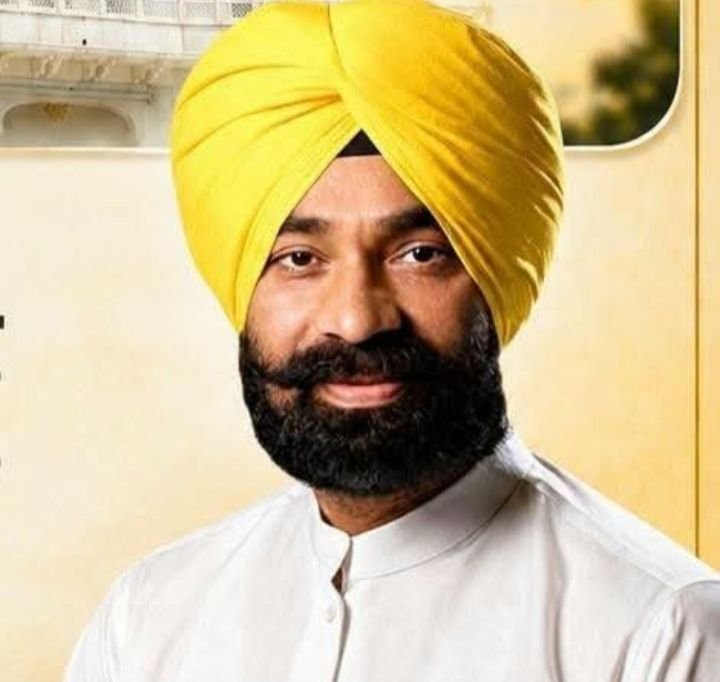
The political contest for the 2027 Punjab Assembly elections is beginning to reshape party equations even before the formal campaign gathers momentum. In another significant instance of pre-election realignment, sitting Aam Aadmi Party MLA from Chamkaur Sahib, Dr Charanjit Singh, joined the Shiromani Akali Dal on Sunday, November 29, after being denied the party ticket for the next Assembly elections. His induction into the Akali Dal took place in the presence of party president Sukhbir Singh Badal, while senior SAD leader N K Sharma said his entry would strengthen the party.
Charanjit Singh’s departure carries particular political significance because he is not an ordinary legislator switching sides. In the 2022 Assembly elections, he defeated Congress leader and then Chief Minister Charanjit Singh Channi from Chamkaur Sahib, turning the constituency into one of the most closely watched electoral contests in Punjab. His victory gave him the image of a political giant-slayer and established his position in a constituency with considerable political importance.
The immediate trigger for his exit was AAP’s decision to nominate Jasvir Singh Garhi from Chamkaur Sahib instead of retaining its sitting MLA. Garhi, a former Punjab BSP president and former chairman of the Punjab State Scheduled Castes Commission, had earlier contested from the same constituency in 2017 but failed to win. His induction into AAP and subsequent selection as the party’s candidate signalled a change in the ruling party’s electoral strategy for the reserved seat. Charanjit Singh, meanwhile, had made it clear after being denied the ticket that he intended to contest the next election. His move to the SAD has now given a new dimension to the political contest in the constituency.
The development also comes against the backdrop of growing movement among AAP legislators ahead of the 2027 polls. Charanjit Singh is the fourth sitting AAP MLA to leave the party in the current phase of political realignment. Earlier, Kunwar Vijay Partap Singh, Chetan Singh Jouramajra and Harmeet Singh Pathanmajra joined the BJP on November 2. Their departures had already raised questions about the ruling party’s ability to maintain internal cohesion as it prepares to seek another mandate. Charanjit Singh’s decision is different in one important respect: while the three legislators moved to the BJP, he has chosen the Akali Dal, a party seeking to rebuild its political base ahead of a crucial election.
His choice of the SAD has become more significant following the recent announcement of the revival of the Akali Dal-BJP alliance for the 2027 Assembly elections. The two parties, which parted ways in 2020 over the farm laws and the farmers’ agitation, are now attempting to restore their old political partnership. However, the constituency-wise seat-sharing arrangement has not yet been finalised. Charanjit Singh has indicated that he joined the Akali Dal following assurances from its leadership and is hopeful of contesting from Chamkaur Sahib if the seat is allocated to the SAD. This makes the final alliance arrangement important not only for the two parties but also for his electoral future.
For the Akali Dal, his induction offers an opportunity to strengthen its presence in a constituency where he has already demonstrated electoral appeal. His experience as a sitting MLA and his victory over a former Chief Minister could provide the party with a recognisable local face. At the same time, the party will have to assess how much of his personal support base can translate into votes under a new political banner. A candidate’s previous victory does not automatically guarantee the transfer of the same support to another party, particularly when local workers, caste equations and alliance considerations influence electoral choices.
For AAP, the challenge is twofold. It must defend its decision to replace a sitting MLA while ensuring that the change does not create resentment among local workers and voters. The party is likely to argue that candidate selection is part of its electoral strategy, but the departure of another sitting legislator gives the Opposition an opportunity to question its internal management and political discipline. The contest between Charanjit Singh, if nominated by the SAD, and AAP’s Jasvir Singh Garhi could therefore become an important test of whether the ruling party’s organisational strength can withstand the exit of a sitting representative.
The larger picture is that Punjab’s 2027 election is increasingly becoming a contest not merely between established party organisations but also around candidate selection, political rehabilitation and the movement of influential leaders. The SAD is attempting to regain lost ground through its renewed alliance with the BJP and the return or induction of leaders, while the BJP is expanding its political presence. The Congress is also exploring broader electoral coordination, including discussions with Left parties, as it prepares to challenge the AAP government. The ruling party, meanwhile, faces the task of defending its record while managing dissatisfaction among leaders who have been denied another opportunity to contest.
The Chamkaur Sahib development underlines a familiar but consequential feature of Punjab politics: ticket distribution can become a turning point in the relationship between a party and its elected representatives. As candidate announcements gather pace, more political leaders may reassess their options, particularly where personal electoral ambitions clash with party calculations. Yet the real test of these switches will come at the ballot box. Whether Charanjit Singh can reproduce his 2022 performance under the Akali Dal banner, and whether AAP can retain Chamkaur Sahib with a new candidate, will offer an early indication of how much these pre-election movements are changing Punjab’s political ground.