

Saptrishi Soni ( Political feature )
A new constitutional flashpoint has erupted in North India as the Central government’s move to introduce the 131st Constitutional Amendment, bringing Chandigarh directly under Article 240, has ignited fierce political reactions in Punjab and renewed debates about Chandigarh’s long-pending demand for an autonomous administrative identity. The development has dramatically shifted the Centre–State debate from routine political disagreements to an emotionally charged confrontation over history, federalism, and regional sentiments.
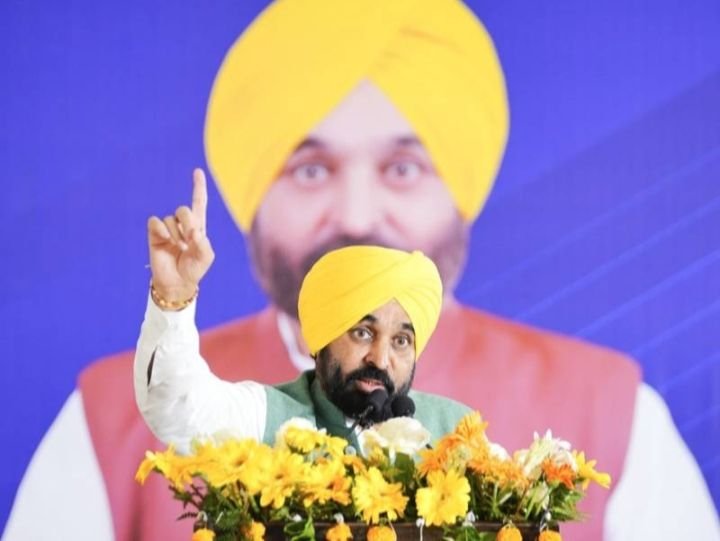
Punjab Chief Minister Bhagwant Mann has framed the move as an “attack on Punjab’s rights”, arguing that Chandigarh is not merely a Union Territory but an emotional and historical extension of Punjab’s statehood. His message is clear: any administrative restructuring that distances Chandigarh from Punjab’s constitutional link will be treated as an attempt to dilute Punjab’s federal authority.
For Punjab, the Chandigarh issue is not new. Ever since 1966, when the state was reorganized and the city became a shared capital of Punjab and Haryana, political leaders, cultural groups, and regional bodies have repeatedly asserted that Chandigarh “was, is, and will remain” part of Punjab. This sentiment resurfaces whenever the Centre attempts administrative amendments. With this new proposal, the Centre seeks to place Chandigarh under the governing framework used for other UTs such as Andaman and Nicobar Islands, Lakshadweep, and Daman and Diu.
To Punjab’s political establishment, this equivalence is unacceptable. Leaders argue that Chandigarh’s special history, its establishment as Punjab’s planned capital, and the decades-long unresolved issue of transferring the city fully to Punjab make the UT distinct from others. Mann, while rallying non-BJP parties, warned that reducing the role of the Punjab Governor and replacing the existing administrative model with an independent Administrator appears as part of a broader plan to sever Chandigarh from Punjab’s influence. The fact that the Centre recently scrapped the post of “Advisor to Administrator” and replaced it with a “Chief Secretary-equivalent” position has further deepened suspicion.
At the heart of the political storm lies an emotional narrative: Punjab believes Chandigarh is not just an administrative capital but a symbol of its post-Partition identity. Any attempt to alter that relationship evokes resistance cutting across party lines. Congress, Akali Dal, and AAP—otherwise political rivals—have surprisingly closed ranks on this matter, turning the Article 240 proposal into a collective Punjab-vs-Centre confrontation.
Yet parallel to Punjab’s outrage, the developments have revived a different debate inside Chandigarh itself. Many administrative experts and civic bodies argue that the city’s governance model—dependant on the Punjab Governor who doubles as Administrator—has long created administrative confusion, overlapping jurisdictions, and policy delays. Residents often face contradictory rules from Punjab and Haryana while being governed by neither. For decades, this has fueled the argument that Chandigarh deserves its own clearly defined administrative architecture.
From Chandigarh’s perspective, a uniform, UT-specific governance structure may bring stability, administrative clarity, and relief from political tug-of-wars. Having its own independent Administrator, separated from political influences of neighbouring states, could streamline decision-making on urban planning, policing, revenue, and civic body reforms. For many civic welfare groups, the Centre’s proposal symbolizes an opportunity for Chandigarh to step out from being treated merely as Punjab and Haryana’s temporary accommodation and evolve as a self-consistent urban entity.
Thus, the controversy exposes two sharply contrasting narratives:
Punjab views the amendment as a threat to its historical rights, a dilution of its federal influence, and a move that undermines state autonomy.
Chandigarh’s advocates see the same proposal as a gateway to overdue administrative independence and clarity.
The Centre, meanwhile, frames the amendment as a technical reform aimed at administrative uniformity among Union Territories. But given Chandigarh’s unique political and emotional history, such a move was bound to spark a deeper confrontation.
The real question now is not merely legal—it is about identity, federal balance, and the future of state–Centre relations in an increasingly centralised political environment. The Article 240 debate has transformed Chandigarh from a shared capital into the latest battleground in India’s shifting federal landscape.
As the winter session of Parliament approaches, all eyes remain on how the Centre moves forward, how Punjab mobilizes its political response, and how Chandigarh’s residents interpret a change that could redefine the city’s future.
#PunjabPolitics #ChandigarhIssue #Article240 #FederalDebate #IndiaGovernance #PunjabVsCentre #ChandigarhIdentity #PoliticalEditorial #IndianPolitics #UTReforms