
The question of unemployment has emerged as one of the sharpest political confrontations of the ongoing Himachal Pradesh Assembly monsoon session, with the BJP seeking an immediate debate on the issue and the ruling Congress government facing renewed pressure to explain its employment record.
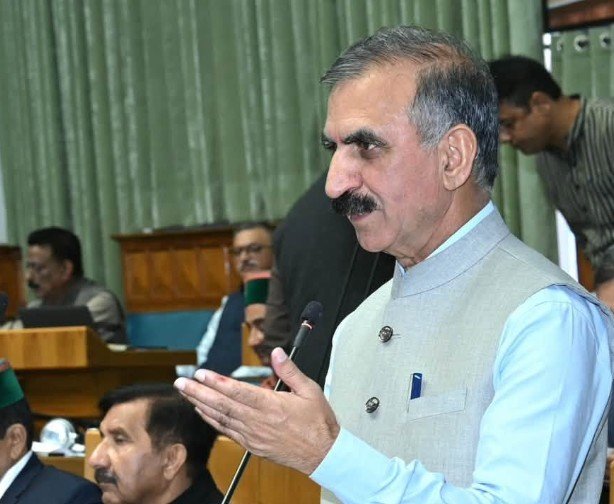
The confrontation unfolded on Monday when BJP legislators submitted notices seeking an urgent discussion on unemployment under Rule 67 of the Assembly’s rules. Speaker Kuldeep Singh Pathania declined to allow the proposed immediate debate, leading to a fresh clash between the Opposition and the government over which issues should receive priority inside the House.
For the Sukhvinder Singh Sukhu government, unemployment is a particularly sensitive political issue. The Congress came to power in Himachal Pradesh in 2022 after making employment and economic opportunities a major part of its political campaign. Nearly four years into the government’s tenure, the Opposition is attempting to turn the employment question into a broader argument about whether the administration has delivered on its promises to young people.
The BJP’s demand for an urgent discussion is therefore not simply about a legislative procedure. It represents an attempt to put the government’s employment record at the centre of the Assembly’s political agenda.
Leader of Opposition Jai Ram Thakur and other BJP legislators have been increasingly raising unemployment, corruption, healthcare and law-and-order issues during the monsoon session. The BJP has argued that these are matters of immediate public concern and should receive detailed discussion rather than being overshadowed by political disputes inside the House.
For the Congress government, however, the employment issue cannot be separated from Himachal’s financial condition.
The Sukhu administration inherited a state facing substantial fiscal pressures and has repeatedly argued that its ability to expand government employment is constrained by the salary and pension burden, debt obligations and other committed expenditure. The government has consequently attempted to balance recruitment with measures aimed at improving revenue and reducing unnecessary expenditure.
This creates one of the central political contradictions for Sukhu.
Young people expect government jobs because the public sector has traditionally been a major source of stable employment in Himachal Pradesh. At the same time, the state’s financial position makes unlimited expansion of government recruitment difficult.
The government’s response has increasingly focused on a combination of public-sector recruitment, private investment, entrepreneurship, skill development and rural economic opportunities.
That broader strategy will be crucial if the Congress government wants to neutralise the BJP’s attack.
The administration can point to recruitment initiatives and its efforts to create employment through tourism, horticulture, agriculture, infrastructure and emerging sectors. It has also been promoting investment in areas such as hospitality and seeking to strengthen the private economy so that employment does not remain dependent primarily on government departments.
But for the Opposition, the central question remains whether these measures have generated enough opportunities for the state’s educated youth.
The political sensitivity is heightened by Himachal’s demographic and economic structure. Government employment has traditionally carried considerable importance, particularly in rural areas where private-sector opportunities remain limited. A young person unable to find stable employment may therefore view government recruitment announcements, examinations and appointment processes as a direct measure of the administration’s performance.
The BJP is attempting to capitalise on that sentiment.
The party’s decision to seek an immediate discussion inside the Assembly gives it a platform to demand answers from the government on recruitment, vacancies, employment schemes and the wider economic situation.
The Speaker’s decision not to admit the urgent debate has consequently become part of the political confrontation.
From the government’s perspective, Assembly business has to follow established rules and procedures, and not every issue can automatically be admitted for an immediate discussion. But politically, procedural decisions can quickly acquire a different meaning when the subject involves a large section of the electorate.
The Congress government will need to ensure that the issue does not remain confined to a procedural dispute.
A substantive debate on employment could actually provide Sukhu with an opportunity to present the government’s wider employment strategy and explain the constraints under which it is operating.
The Chief Minister could argue that the state’s employment problem cannot be solved simply by creating more government posts. Instead, Himachal needs an economy capable of generating sustainable private-sector employment.
That would connect the employment debate with the government’s broader development agenda.
Tourism, for example, remains one of Himachal’s most important employment-generating sectors. The government is seeking fresh investment in hospitality and related infrastructure, while also attempting to diversify tourism beyond the traditional destinations.
Horticulture and agriculture provide another potential avenue.
The state’s apple economy, vegetable cultivation, dairy sector and natural-farming initiatives support large numbers of rural households. Strengthening value chains, processing and market access could create employment beyond the farm itself.
The same argument applies to small businesses and entrepreneurship.
But these changes require time, while unemployment is an immediate political concern.
That is precisely why the BJP sees the issue as a powerful weapon against the government.
The Congress, meanwhile, has to convince young voters that its employment strategy extends beyond government appointments and that its economic policies can create opportunities over the longer term.
The debate also comes as Himachal’s political parties begin positioning themselves for the next Assembly election.
The 2027 election is still ahead, but employment, governance and financial management are likely to become increasingly important themes. For the BJP, challenging the Congress government’s record on jobs provides a way to connect several issues into one political narrative.
For Sukhu, the objective will be to demonstrate that his government is not merely managing the state’s financial difficulties but creating a new economic model capable of generating opportunities.
The latest Assembly confrontation therefore has significance well beyond one rejected notice.
It reflects a deeper political struggle over the government’s development record.
The BJP wants the Assembly to focus on the experiences of young people who are waiting for jobs and opportunities. The Congress wants to highlight the structural financial constraints it inherited and the longer-term reforms it says are necessary to make Himachal economically stronger.
Both arguments will increasingly compete for public attention.
The immediate challenge for Sukhu is to prevent unemployment from becoming an exclusively Opposition-driven narrative. The government has an opportunity to respond with detailed figures on recruitment, vacancies, private investment, entrepreneurship, skill development and employment creation.
If it can demonstrate measurable progress, it can turn the Assembly confrontation into an opportunity to defend its record.
If it cannot, unemployment could become one of the BJP’s most effective political themes as the state moves closer to the 2027 electoral battle.
For Himachal’s young population, however, the political arguments are ultimately secondary.
What matters is whether education leads to employment, whether skills lead to income and whether young people can build a secure future without having to leave the state.
That is the real issue now sitting behind the political confrontation in the Assembly.
And as the monsoon session progresses, unemployment is likely to remain one of the most consequential issues confronting the Sukhu government.