
Sukhvinder Singh Sukhu has hailed Himachal Pradesh’s sharp rise in the national education rankings as evidence of what he described as a decisive shift from “institution expansion” to “quality-driven schooling,” after the hill state secured the sixth position in India in the latest Performance Grading Index (PGI) 2.0 released by the Union Ministry of Education.
The achievement marks a significant jump for Himachal Pradesh, which has climbed seven places from 13th to 6th in the national rankings. Among states specifically, Himachal has secured the third position, placing it among the country’s stronger performers in school education outcomes and governance indicators.
The Chief Minister described the ranking as a moment of collective pride for the state, particularly because Himachal Pradesh has been placed in the prestigious “Prachesta-2” category under the PGI framework. The category reflects states that have demonstrated notable progress across educational infrastructure, governance, learning outcomes and access to quality schooling.
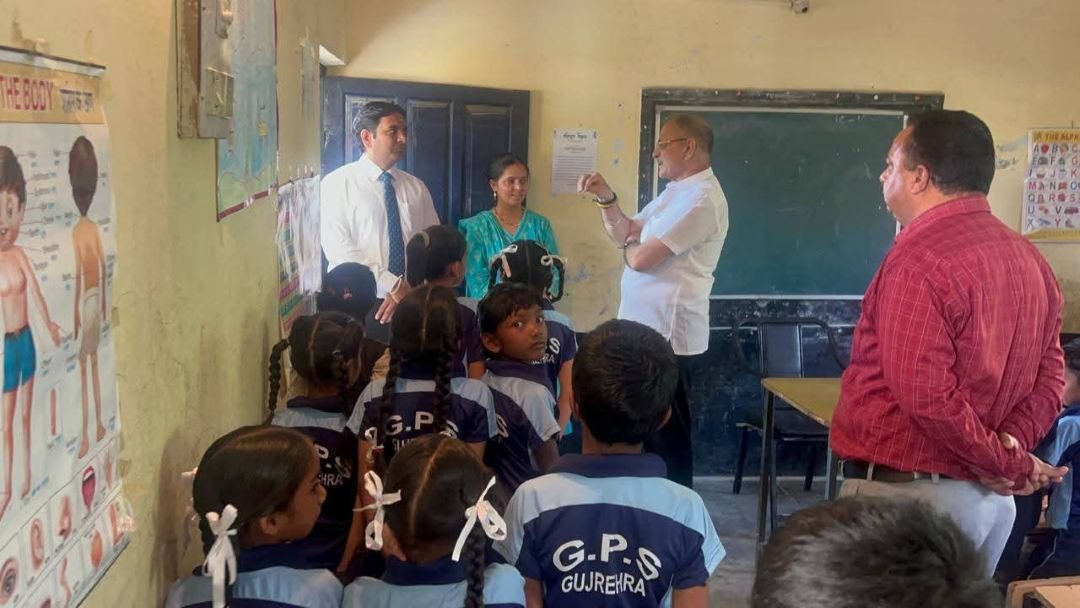
Speaking on the development, Sukhu credited teachers, students, education officers and support staff for what he called a “collective institutional effort” that helped reverse concerns over declining educational standards in recent years. The Chief Minister argued that the state government’s emphasis on educational quality, rather than merely increasing the number of institutions, had begun yielding measurable results.
In a pointed political remark, Sukhu accused the previous BJP government of focusing largely on opening schools without ensuring adequate staffing, infrastructure or financial planning. He said the current Congress government had instead concentrated on strengthening foundational education systems so that children studying in remote villages could receive opportunities comparable to those available in urban centres.
The state government has over the past two years positioned education reforms as one of its flagship governance priorities. Officials say the reforms are aimed not only at improving rankings but also at preparing students for a rapidly changing global economy where language skills, technological familiarity and broader exposure increasingly shape employment opportunities.
One of the major reforms highlighted by the Chief Minister is the introduction of English-medium education from Class 1 in all government schools across the state. The move was projected as an attempt to bridge the widening divide between private and government schooling, particularly in rural areas where parents often feel disadvantaged by limited access to English-language education.
The government has also announced the establishment of at least one Rajiv Gandhi Day-Boarding School in every Assembly constituency. These institutions are expected to function as model schools equipped with modern facilities and expanded academic support systems aimed at reducing the need for students to migrate outside their local regions for better schooling.
Sukhu also underlined the government’s decision to expose teachers and students to international education systems. Under the initiative, teachers are being sent abroad on exposure visits to study global teaching methods and school management practices. Meritorious students have also been included in overseas educational tours, a move the government says is intended to broaden perspectives and encourage academic ambition among rural youth.
Teacher shortages, long regarded as one of the biggest structural challenges in Himachal’s public education system, were also addressed in the Chief Minister’s remarks. He said the government is prioritising the filling of vacant teaching posts to ensure that academic sessions are not disrupted and students are not deprived of subject-specific instruction.
Another major policy shift involves the affiliation of 156 government schools with the Central Board of Secondary Education curriculum. According to the government, these schools will offer Arts, Science and Commerce streams and will be equipped with adequate teaching and non-teaching staff. The move is expected to standardise academic quality and make government schools more competitive with private institutions.
Education experts have long noted that Himachal Pradesh historically maintained relatively strong literacy indicators despite its difficult mountainous geography. However, concerns over infrastructure gaps, faculty shortages and uneven quality had increasingly emerged over the past decade. The latest PGI improvement is therefore being viewed by many as a potentially important indicator of systemic recovery.
The Chief Minister maintained that the government’s broader vision is to ensure that students from Himachal Pradesh do not feel compelled to leave the state in search of quality education opportunities elsewhere. He said future reforms would continue to focus on strengthening institutional quality, modernising classrooms and building confidence among students studying in government schools.
The latest national rankings are likely to provide political momentum to the Sukhu government, which has repeatedly projected education and healthcare as the centrepieces of its governance agenda. At the same time, the challenge for the administration will now be to sustain these gains and translate improved rankings into measurable long-term learning outcomes for students across both urban and rural Himachal Pradesh.