
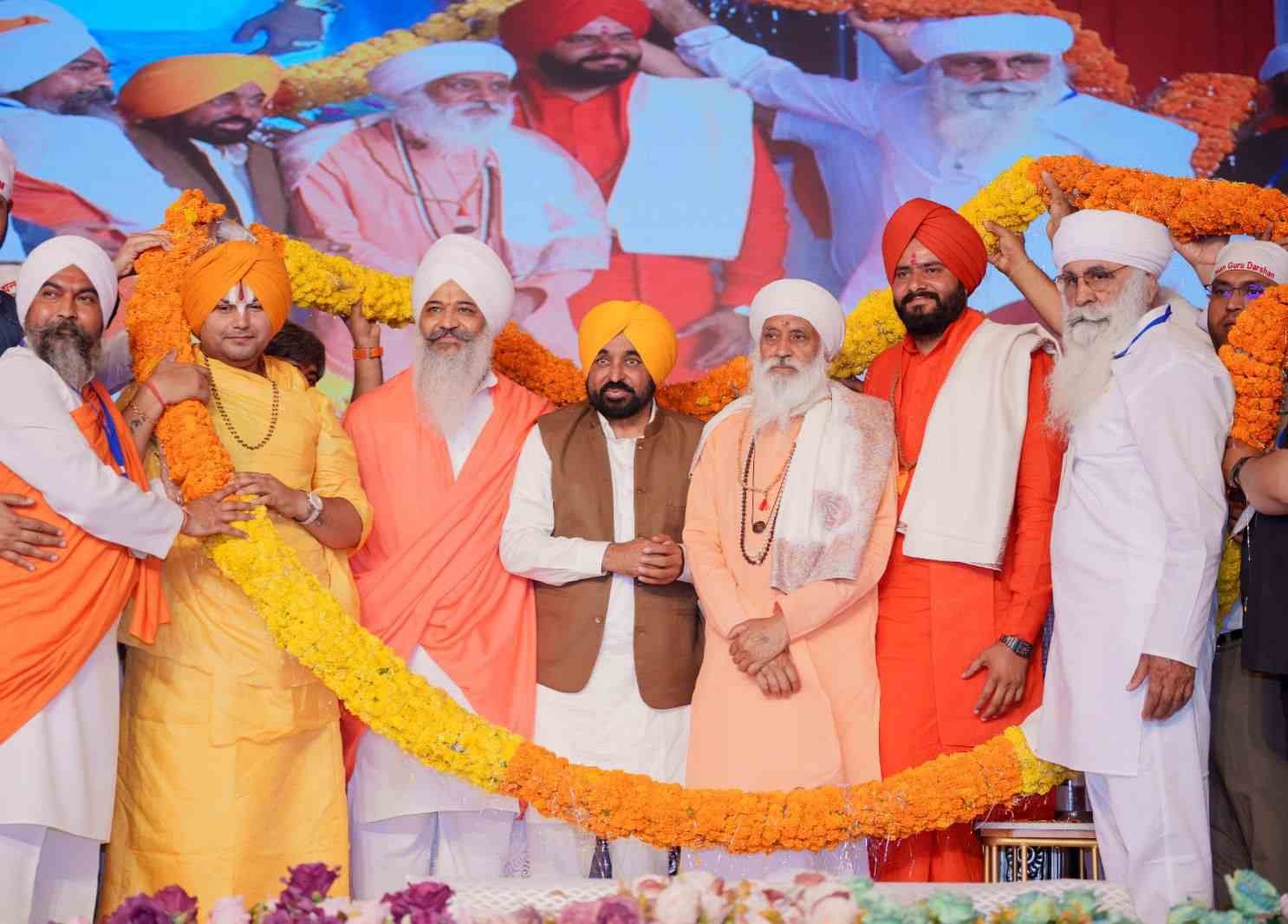
Punjab Chief Minister Bhagwant Singh Mann has reiterated his government’s commitment to eliminating the drug problem from the state, describing it as a defining battle for Punjab’s future. Speaking at an anti-drug awareness event in Batala, held on the occasion of the 38th Gurugaddi Divas of Sant Trilochan Das Ji Maharaj, Mann said the state’s ongoing campaign against narcotics had already delivered significant results and was now evolving into a wider social movement.
Addressing a large gathering, the Chief Minister stated that the “Yudh Nashean Virudh” campaign, launched over a year ago, had dealt a substantial blow to drug trafficking networks. According to official figures shared by the government, more than 63,000 individuals linked to drug smuggling have been arrested over the past 437 days. Alongside arrests, authorities have also moved to dismantle the financial backbone of the drug trade by demolishing properties allegedly built using illicit proceeds.
Mann emphasised that the campaign was not limited to enforcement alone, but also focused on rehabilitation and reintegration of those affected by addiction. He called upon citizens to actively support the effort, suggesting that a collective resolve could transform the campaign into a decisive turning point for the state. “If people stand united, no force can stop Punjab from becoming drug-free,” he said.
The Chief Minister also highlighted parallel efforts to curb organised crime under the “Gangstran Te Vaar” initiative, a statewide crackdown led by specialised police units. Running for over three months, the campaign has targeted criminal networks believed to be operating alongside drug syndicates, signalling a broader law-and-order push by the state government.
Linking the anti-drug drive to Punjab’s cultural and spiritual legacy, Mann said the state had historically stood resilient in times of crisis. He invoked the teachings of Sikh Gurus and saints, describing the campaign as inspired by values of justice and collective responsibility. He added that Punjab’s identity as a land of courage and enterprise must be restored, particularly for younger generations who have been vulnerable to both substance abuse and outward migration.
Beyond law enforcement, the Chief Minister used the platform to outline a series of welfare measures aimed at strengthening public services. He pointed to the expansion of healthcare coverage under the state’s health insurance programme, which aims to provide free treatment of up to ₹10 lakh per family. He urged citizens to enrol in the scheme, noting that millions of beneficiaries had already received treatment under it.
Mann also referenced ongoing initiatives for women’s financial support, including a monthly assistance scheme designed to provide direct cash benefits to a large section of women across the state. He argued that such welfare programmes were part of a broader effort to ensure that public funds were channelled directly into improving people’s lives.
In addition, the Chief Minister credited the introduction of a stricter anti-sacrilege law with preventing incidents related to the desecration of religious texts. He described the legislation as a response to longstanding public demand and said it was essential for maintaining communal harmony in the state.
Observers note that the government’s messaging reflects an attempt to combine law enforcement with social welfare and cultural identity, particularly at a time when Punjab’s political climate is becoming increasingly competitive ahead of the next Assembly elections. The administration has sought to present its anti-drug campaign as both a governance priority and a moral mission, aimed at rebuilding public trust and safeguarding the state’s youth.
While the scale of arrests and enforcement measures signals an aggressive approach, the long-term success of the campaign may depend on sustained efforts in rehabilitation, education and employment generation. For now, the government’s stance remains clear: the fight against drugs is being positioned not merely as a policy initiative, but as a defining test of Punjab’s social and political resolve.