
The Sukhvinder Singh Sukhu government has placed fiscal discipline and administrative restructuring at the centre of its governance agenda with a proposal to reduce the sanctioned strength of senior All India Services officers in Himachal Pradesh — a move the government says could save around ₹200 crore a year and make the state’s bureaucracy more efficient.
The proposal to cut the sanctioned strength of the Indian Administrative Service, Indian Police Service and Indian Forest Service comes at a politically sensitive time for the Congress government. Himachal Pradesh is carrying a substantial debt burden, while the administration is under pressure to maintain welfare commitments, finance development projects and respond to recurring natural disasters without allowing government expenditure to spiral further.
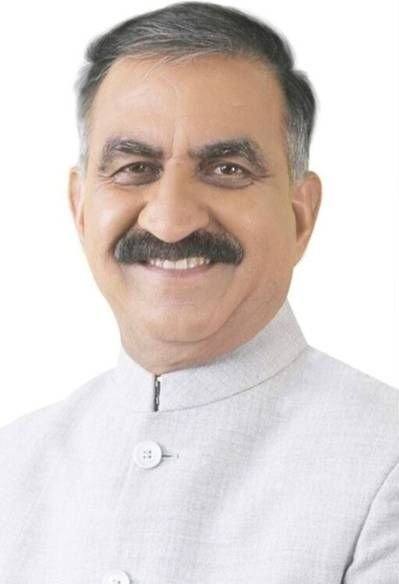
Sukhu has argued that the state does not require such a large senior bureaucracy and that several officers are not being utilised to their full capacity. The government therefore intends to seek the Centre’s approval for a reduction in the sanctioned cadres, presenting the move as an exercise in administrative rationalisation rather than simply a cost-cutting measure.
Under the proposal, the sanctioned IAS strength would be reduced from 153 to 130, representing a cut of 23 posts. The government has also proposed reducing the Indian Forest Service cadre from 118 to 83, a reduction of 35 posts. The IPS cadre, currently sanctioned at 96 posts, would also be downsized, although the exact final reduction is still part of the process.
The political importance of the proposal lies in the argument behind it.
Sukhu has increasingly presented his administration as a government attempting to impose financial discipline on a state whose expenditure commitments have grown faster than its fiscal capacity. His latest move seeks to demonstrate that austerity is not being applied only to public-facing schemes or routine expenditure but also to the administrative structure at the highest level.
The Chief Minister has argued that maintaining a large cadre of senior officers creates an unnecessary financial burden through salaries, support staff, official vehicles, accommodation and other administrative expenses. The government believes that reducing sanctioned posts could release resources for development and welfare programmes.
The argument also fits into Sukhu’s broader political narrative of “vyavastha parivartan” — changing the way the government itself functions.
For the Congress government, this is an important distinction. A conventional austerity programme can be politically difficult because voters may interpret expenditure cuts as a reduction in public services. By targeting administrative expenditure, Sukhu is attempting to frame fiscal restraint as institutional reform.
The proposal nevertheless faces questions.
Serving and retired civil servants have challenged the government’s reasoning, arguing that the number of sanctioned posts does not necessarily correspond to the actual workload of the bureaucracy. Some officers have multiple departmental responsibilities, while several departments face administrative and staffing pressures of their own. Critics have also questioned whether the projected ₹200 crore saving would directly follow from reducing sanctioned strength.
That criticism is politically relevant because the success of the reform will ultimately be judged not merely by the number of posts removed from the sanctioned cadre but by whether the government can actually reduce expenditure without weakening administration.
There is also a structural argument behind the proposal.
Himachal Pradesh has a population of around 70 lakh but maintains a relatively high number of sanctioned senior civil-service positions compared with some neighbouring states. According to analysis of the cadre structure, the state currently has 153 sanctioned IAS, 96 IPS and 118 IFS posts. The government believes the administrative establishment should be aligned more closely with the actual requirements of a comparatively small state.
Sukhu has also indicated that the government is encouraging officers who wish to go on central deputation. Files seeking such transfers are reportedly being processed more quickly than in the past, reflecting the government’s effort to make better use of the existing workforce while reducing the pressure created by an oversized sanctioned cadre.
The issue is particularly important against the backdrop of Himachal’s financial condition. The state government is dealing with debt estimated at more than ₹1 lakh crore, while continuing to finance salaries, pensions, welfare programmes and reconstruction following natural disasters. The government has repeatedly argued that fiscal management is essential if it is to protect development spending in the long term.
The BJP, meanwhile, is likely to examine the proposal through a political rather than purely administrative lens.
The Opposition has already been attacking the Sukhu government over financial management, development activity and governance. During the ongoing monsoon session of the Assembly, BJP legislators have intensified their criticism of the Congress government, alleging corruption and administrative failure. On August 25, BJP MLAs staged a protest outside the Assembly carrying suitcases and accused the government of allowing corruption to become widespread. These allegations are political claims and have not been established as facts.
This gives the bureaucracy proposal a larger political context.
The Congress can argue that it is taking difficult decisions to correct structural weaknesses and control expenditure. The BJP can counter that the government is struggling with the consequences of its own financial policies and that administrative restructuring alone cannot resolve Himachal’s deeper fiscal problems.
For Sukhu, the timing is crucial. The government is approaching the second half of its tenure, and every major policy decision is increasingly being evaluated through the lens of the next Assembly election.
The Chief Minister therefore needs to show that fiscal discipline can coexist with effective governance. If the reduction in bureaucracy results in measurable savings while maintaining or improving public services, the government could present it as evidence of responsible administration.
If, however, administrative capacity suffers or the promised savings fail to materialise, the BJP will have an obvious political opening.
The debate also reflects a larger question confronting Himachal Pradesh: how can a welfare-oriented hill state sustain its existing commitments while creating enough fiscal space for infrastructure, employment and disaster resilience?
The answer cannot come from reducing bureaucracy alone. But the proposal signals that Sukhu is willing to confront an issue that successive governments have discussed but found difficult to resolve.
In that sense, the move is both an economic measure and a political statement.
The Sukhu government is telling Himachal that financial restraint must begin within the machinery of government itself. Whether voters ultimately see that as meaningful reform or evidence of a government struggling under fiscal pressure will depend on what the policy delivers.
For now, the proposed bureaucracy cut has added another important dimension to Himachal’s political debate — one in which the size of government, the cost of administration and the state’s ability to pay for its promises are becoming inseparable from the question of political credibility.