

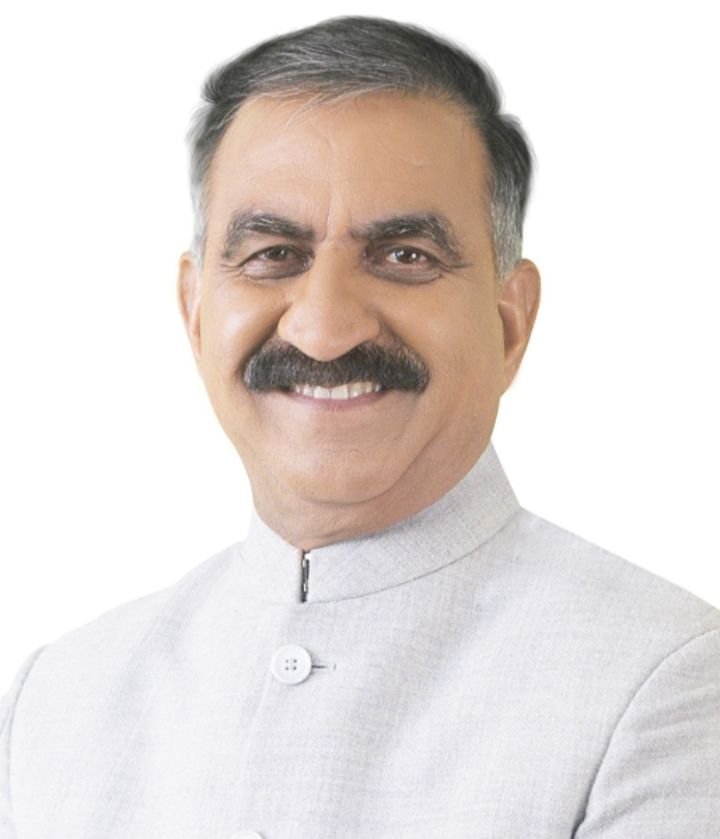
Praveen Soni
The recently concluded Haryana Rajya Sabha election was not just a routine legislative exercise—it turned into a high-stakes political chess match, where strategy, discipline and timing played a decisive role. While the spotlight largely remained on Haryana’s political heavyweights, the real story unfolded behind the scenes. At the center of this carefully executed plan stood Himachal Pradesh Chief Minister Sukhvinder Singh Sukhu, whose role in what is now being referred to as “Operation Himachal” has elevated his stature within the Congress party.
The background to this dramatic political maneuver lies in the Congress party’s past experience in the 2022 Rajya Sabha elections, when cross-voting had cost the party dearly. Determined not to repeat that episode, senior Congress leader Bhupinder Singh Hooda anticipated a similar threat in 2026. There were strong indications that the BJP, through an independent candidate, could attempt to engineer defections or cross-voting among Congress MLAs. This looming risk prompted the Congress leadership to adopt an extraordinary containment strategy.
This is where Sukhvinder Singh Sukhu’s role became crucial. Known for his organizational clarity and administrative decisiveness, Sukhu was approached to facilitate a secure and controlled environment for Congress legislators outside Haryana. Without delay, he ensured logistical arrangements in Himachal Pradesh—hotel bookings, transport coordination, and security protocols were all put in place with remarkable speed and precision.
The plan was executed with military-like secrecy. Congress MLAs were instructed to assemble at a designated location in Haryana under the pretext of a routine political gathering. From there, a carefully coordinated movement began, shifting them out of the state and into Himachal Pradesh. Notably, even the destination hotel was not disclosed to the legislators in advance, underscoring the level of confidentiality maintained throughout the operation.
Out of the expected group, 31 MLAs made the journey, while a handful stayed back citing various reasons—an aspect that initially raised eyebrows within the party. However, the core objective remained intact: to secure a majority of loyal legislators in a controlled setting, away from any external influence.
Once inside Himachal Pradesh, the operation took on an even more structured form. Legislators were kept under continuous supervision, often advised to move in groups rather than individually. Communication channels were tightly regulated, with reports suggesting the use of signal-jamming mechanisms to prevent any external outreach attempts. Senior leaders such as Deepender Hooda, along with other trusted figures, were assigned to remain on the ground, ensuring discipline and cohesion among the MLAs.
What stands out in this entire exercise is Sukhu’s understated yet decisive leadership. Unlike conventional political interventions, his role was not overtly political but deeply strategic. By providing a secure administrative ecosystem, he enabled the Congress leadership to execute its plan without disruption. This reflects a rare blend of governance capability and political acumen.
Sukhu’s involvement also signals a broader shift within the Congress ecosystem. Traditionally seen as a regional leader, he has now demonstrated his ability to contribute to national-level political strategy. The trust reposed in him by senior leadership indicates that he is increasingly being viewed as a dependable figure capable of handling sensitive assignments.
From a political standpoint, “Operation Himachal” has multiple implications. For one, it showcases how interstate coordination within the Congress can be leveraged effectively during high-stakes elections. Secondly, it highlights the importance of proactive strategy in countering political poaching—a phenomenon that has become increasingly common in Indian politics.
For Himachal Pradesh, Sukhu’s rising profile could translate into greater political leverage at the national level. A Chief Minister who is seen as a reliable strategist is likely to have stronger influence in central party decisions, which in turn can benefit the state in terms of policy attention and resource allocation.
Moreover, Sukhu’s approach—focused on systems, discipline and quiet execution—positions him as a “leader with a difference.” In an era where politics is often driven by optics and rhetoric, his method stands out for its emphasis on groundwork and precision. This not only strengthens his credibility within the party but also enhances his image as a leader who can be relied upon in complex situations.
The success of this operation also underlines a key lesson for political management: elections are no longer won solely on numbers, but on the ability to safeguard those numbers. By anticipating risks and acting decisively, the Congress leadership, with Sukhu playing a pivotal role, managed to neutralize potential threats and secure its position.
As the dust settles on the Haryana Rajya Sabha elections, one thing is clear—while many leaders played visible roles, it was the silent architect in Himachal Pradesh who ensured that the structure did not collapse. In doing so, Sukhvinder Singh Sukhu has not only strengthened his standing within the Congress but has also signaled his emergence as a key player in the party’s evolving national strategy.
In the times to come, this episode may well be remembered as the moment when Sukhu carved out a distinct space for himself—both as an administrator and as a strategist capable of influencing outcomes far beyond his home state.