

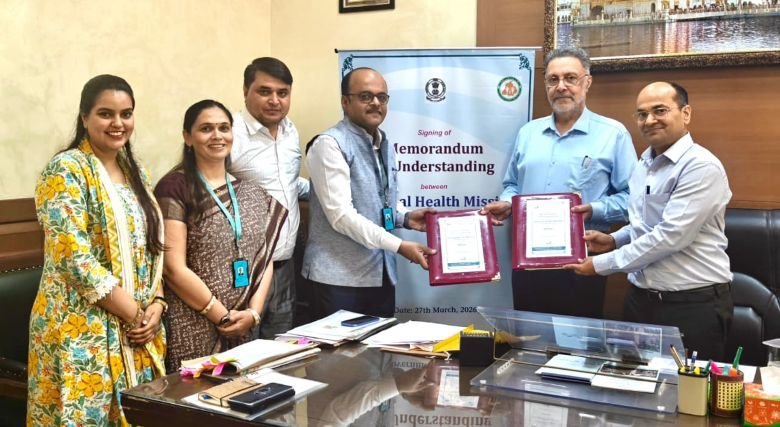
In a significant step towards transforming public healthcare delivery, the Punjab government has initiated a strategic collaboration aimed at improving maternal and child health outcomes across the state. Aligning with its broader governance model focused on accessible and technology-driven healthcare, the state has entered into a long-term partnership with an international public health organization to enhance the quality and reach of critical healthcare services.
This development reflects the state’s continued emphasis on strengthening its healthcare infrastructure under a governance framework that prioritizes welfare-oriented policies and systemic reforms. The collaboration is expected to bring global expertise into Punjab’s healthcare ecosystem, particularly in the domain of reproductive, maternal, newborn, child, adolescent health, and nutrition services, commonly referred to as RMNCHA+N.
At the core of this initiative is the integration of advanced digital tools and data-driven systems into routine healthcare delivery. The government aims to leverage emerging technologies, including artificial intelligence and real-time monitoring systems, to track high-risk pregnancies and ensure timely medical interventions. By doing so, authorities intend to significantly reduce maternal and neonatal mortality rates, which remain critical indicators of public health performance.
The partnership focuses on strengthening care at every stage—antenatal, intrapartum, and postnatal—ensuring that pregnant women and newborns receive continuous and standardized medical attention. Through the use of digital beneficiary tracking systems and smart monitoring devices, healthcare providers will be able to identify complications early and respond with greater precision and speed.
Officials indicate that one of the major breakthroughs of this initiative lies in its real-time surveillance capabilities. With the help of integrated platforms and IoT-enabled devices, medical teams can monitor patient data continuously, allowing for quicker decision-making in emergency situations. This shift from reactive to proactive healthcare delivery is expected to enhance the overall efficiency of the system.
Beyond technological advancements, the initiative also places strong emphasis on capacity building within the healthcare workforce. Training programs, supportive supervision, and technical assistance at the policy level are being incorporated to ensure that medical staff are well-equipped to adapt to new systems and protocols. This comprehensive approach is designed to create a sustainable and scalable model for healthcare delivery across both urban and rural regions of Punjab.
The move is also seen as part of a broader effort by the state government to position Punjab as a leader in digital health innovation. By integrating global best practices with local healthcare needs, the administration aims to create a robust framework that not only improves immediate health outcomes but also contributes to long-term public health goals.
Importantly, the initiative aligns with India’s commitments under the Sustainable Development Goals (SDGs), particularly those related to reducing maternal and child mortality and ensuring healthy lives for all. By focusing on early detection, timely intervention, and continuous monitoring, the program seeks to address systemic gaps that have historically affected healthcare delivery in vulnerable populations.
The collaboration is expected to have far-reaching implications, especially in rural and underserved areas where access to quality maternal healthcare has often been limited. With improved tracking and outreach mechanisms, the government aims to ensure that no beneficiary is left out of the healthcare system.
This partnership underscores a growing trend in governance where states are increasingly adopting technology-driven solutions to tackle complex public health challenges. In Punjab’s case, the emphasis on digital integration, combined with international expertise, signals a forward-looking approach to healthcare reform.
As the initiative rolls out across the state, its success will likely be measured not only in improved health indicators but also in its ability to create a replicable model for other regions. By blending innovation with inclusivity, Punjab is attempting to redefine how public healthcare systems can function more effectively in the modern era.
With sustained implementation and continuous monitoring, this initiative has the potential to mark a turning point in the state’s healthcare journey, offering a more resilient, responsive, and equitable system for mothers and children alike.