
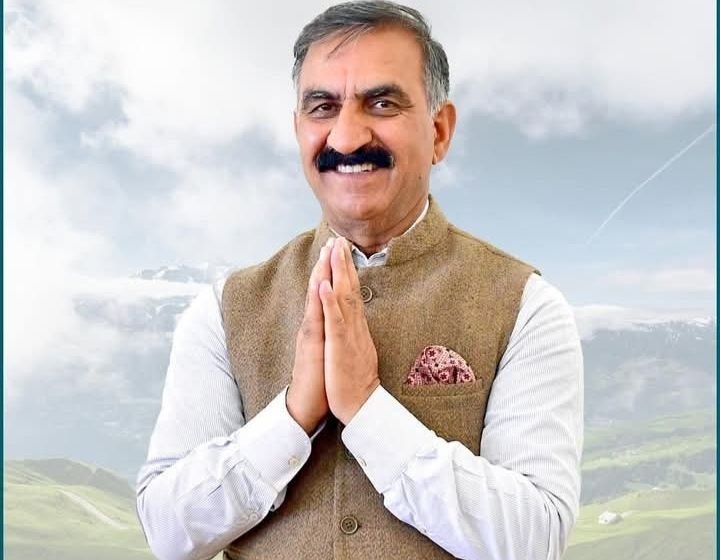
Shimla: The Himachal Pradesh government led by Chief Minister Thakur Sukhvinder Singh Sukhu is considering a significant reduction in the sanctioned strength of its senior civil and police services, arguing that the relatively small hill state does not require such a large administrative cadre.
The government plans to seek the Centre’s approval to reduce the sanctioned strength of the Indian Administrative Service (IAS) in Himachal Pradesh by 23 posts. If approved, the state’s IAS cadre strength would come down from 153 to 130 officers, representing a reduction of around 15%.
The move is part of a broader exercise to reassess the size and cost of the state’s senior administrative structure. The government is also proposing a substantial reduction in the Indian Forest Service (IFS) cadre, while a review of the sanctioned strength of Indian Police Service (IPS) officers is also under consideration.
Chief Minister Sukhu has argued that Himachal Pradesh, given its geographical size and population, does not need an excessively large administrative hierarchy. He has also indicated that, in his view, the IAS cadre could eventually be brought down further to around 100-110 officers, although the immediate proposal before the Centre is to reduce the sanctioned strength to 130.
The proposed changes have been presented primarily as a measure of fiscal discipline at a time when the state government is under pressure to manage its expenditure and make greater resources available for development and welfare programmes.
According to the state government’s assessment, maintaining the existing strength of IAS, IPS and IFS officers costs the exchequer around Rs 200 crore annually. The calculation goes beyond salaries and includes expenditure associated with official vehicles, residential facilities, support staff and other facilities provided to senior officers.
Officials estimate that the average annual expenditure associated with an IAS or IFS officer can range between Rs 45 lakh and Rs 50 lakh when the wider cost of the administrative support structure is taken into account.
The proposed reduction in the IFS cadre is particularly substantial. The government is considering bringing the sanctioned strength down from 118 to 83, effectively eliminating 35 posts.
The IPS cadre is also under review. Himachal Pradesh currently has 96 sanctioned IPS positions, and the government intends to reduce this number as part of the restructuring exercise. The final strength of the revised IPS cadre, however, has not yet been determined.
The government’s argument is that reducing sanctioned positions does not necessarily mean compromising governance. Instead, it believes a leaner senior administrative structure could improve efficiency while reducing the recurring cost of maintaining a large bureaucracy.
The proposed restructuring also reflects a wider debate in Himachal Pradesh over how limited public resources should be allocated. The state faces substantial expenditure pressures, while successive governments have sought greater financial space for infrastructure, public services, social welfare and development projects.
The Sukhu government’s position is that any savings generated through rationalisation of the senior administrative cadre should ultimately be redirected towards development and welfare programmes.
However, the proposal will require consideration and approval at the central level, particularly for changes to the sanctioned strength of the All India Services cadres.
If implemented, the restructuring would represent a notable shift in the state’s approach to its administrative establishment, with the government seeking to balance the need for effective governance against the financial cost of maintaining a large senior-officer structure.