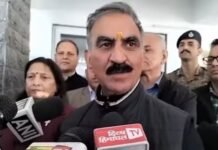

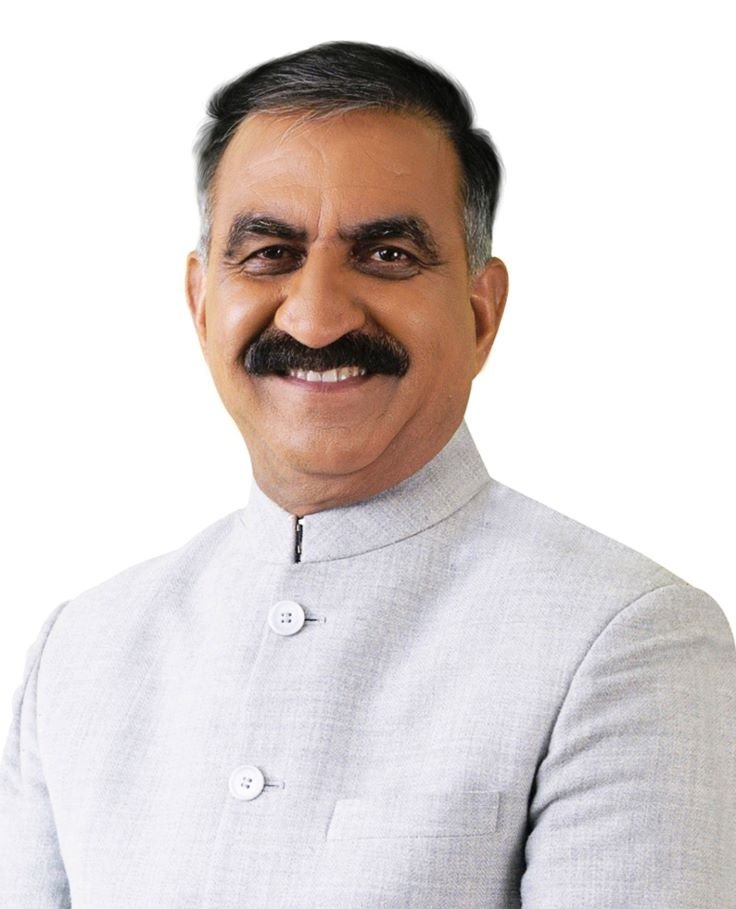
The Himachal Pradesh Government has intensified its political messaging ahead of the state’s evolving electoral landscape by asserting that it has fulfilled all major election guarantees promised to voters during the 2022 Assembly elections. Positioning itself as a government focused on welfare delivery, rural empowerment and social security, the administration led by Chief Minister Sukhvinder Singh Sukhu says it has moved beyond campaign commitments to implement what it describes as a “people-centric development model” within three and a half years of coming to power.
At the centre of the government’s narrative is the restoration of the Old Pension Scheme (OPS), one of the Congress party’s most prominent election promises. The decision, approved during the very first Cabinet meeting after the government assumed office, restored defined pension benefits for nearly 1.36 lakh state employees. The move marked a significant political and administrative shift away from the National Pension System (NPS), which had long been criticised by employee unions for offering limited post-retirement financial security.
Government officials claim that retired employees who previously received pensions ranging between ₹2,000 and ₹3,000 under the NPS framework are now receiving substantially higher monthly pensions under OPS, in some cases between ₹20,000 and ₹40,000. The Congress government has repeatedly projected the policy as both a welfare measure and a corrective step aimed at restoring dignity and financial stability to retired public servants.
Another flagship initiative frequently highlighted by the Sukhu administration is the Indira Gandhi Pyari Behna Sukh-Samman Nidhi Yojana, under which eligible women are being provided a monthly financial assistance of ₹1,500. According to government data, ₹29.12 crore has already been distributed among 35,687 women in the first phase of implementation. In the next phase, the scheme is expected to cover nearly one lakh women from economically weaker households.
The state government has also sought to build its political identity around employment generation and youth-oriented economic initiatives. Under the Rajiv Gandhi Swarozgar Start-up Scheme, launched with an outlay of ₹680 crore, young entrepreneurs are being encouraged to pursue self-employment opportunities. Complementing this effort is the Rajiv Gandhi e-Taxi Scheme, which offers a 50 percent subsidy for purchasing taxis, particularly aimed at unemployed youth seeking livelihood opportunities.
The administration has simultaneously attempted to position Himachal Pradesh as a model for green and sustainable economic practices. Financial incentives are being offered for the installation of solar power projects on private land, with interest subsidies ranging from 4 to 5 percent depending on whether the projects are located in tribal or non-tribal regions. The government has also expanded support for natural farming through the Rajiv Gandhi Prakritik Kheti Start-up Scheme.
As part of this broader agricultural policy, the state has significantly revised minimum support prices (MSP) for naturally cultivated crops. MSP for naturally grown wheat has been increased from ₹60 to ₹80 per kilogram, maize from ₹40 to ₹50, while turmeric prices have been sharply raised from ₹90 to ₹150 per kilogram. Ginger has also been brought under MSP support for the first time.
Education reforms form another major pillar of the government’s governance narrative. English-medium education has been introduced from Class 1 in government schools across the state, while Rajiv Gandhi Day-Boarding Schools are being developed in phases in every Assembly constituency. Construction approvals have already been granted in 42 constituencies, with work reportedly underway in several districts.
In rural Himachal, where dairy farming remains a key source of livelihood, the government has substantially raised procurement prices for milk. Cow milk prices have nearly doubled from ₹32 to ₹61 per litre, while buffalo milk procurement rates have increased from ₹47 to ₹71 per litre. The state has also started purchasing organic manure and vermi-compost from livestock owners at ₹300 per quintal, a move intended to simultaneously support rural incomes and organic farming practices.
Employment generation remains one of the most politically sensitive issues in Himachal Pradesh, particularly among young voters. The government claims that more than 23,200 jobs have been provided in the government sector during the past three years, while recruitment processes for thousands of additional vacancies, including over 9,500 teaching posts, are ongoing. In the private sector, officials say more than 51,000 employment opportunities have been facilitated through job fairs, campus interviews and skill development programmes.
The government has also focused on strengthening the horticulture sector, a backbone of Himachal’s rural economy. The implementation of the Universal Carton System and revised support prices under the Market Intervention Scheme have been projected as major relief measures for orchardists. Officials say Himachal Pradesh has become the first state in India to implement a dedicated Horticulture Policy, aimed at stabilising income and improving market access for fruit growers.
In healthcare, the Sukhu administration has highlighted the introduction of advanced medical technologies, including robotic surgery, PET scan facilities, 3 Tesla MRI systems and upgraded CT scan services. The government says these investments are intended to reduce the need for patients to travel outside the state for specialised treatment.
Another welfare-focused initiative announced by the government is the Apna Parivar-Sukhi Parivar Scheme, under which nearly one lakh economically weaker families are expected to receive up to 300 units of free electricity every month.
Chief Minister Sukhvinder Singh Sukhu has repeatedly maintained that his administration is not merely implementing election promises but attempting to reshape the state’s social and economic priorities around inclusivity, welfare and rural empowerment. Political observers, however, note that these achievements are also being projected strategically as the Congress government seeks to consolidate public support amid a politically competitive atmosphere in Himachal Pradesh.
Whether these welfare measures translate into long-term political dividends remains to be seen, but the government’s messaging is increasingly clear: it wants to be seen not simply as an administration fulfilling promises, but as one attempting to redefine governance through direct welfare delivery and grassroots economic intervention.