
In a significant move that combines environmental sustainability with social welfare, the Himachal Pradesh Government has decided to channel a substantial portion of revenue generated under its Green Panchayat Initiative towards the welfare of orphans and widows. The decision is being viewed as a unique model of inclusive development, where clean energy generation will directly contribute to the upliftment of vulnerable sections of society.
The state government has revised the revenue-sharing formula for the Green Panchayat programme, under which ground-mounted solar power projects of 500 KW capacity are being established in 100 Gram Panchayats across Himachal Pradesh. The initiative aims not only to strengthen renewable energy production at the grassroots level but also to create a sustainable source of funding for social welfare programmes.
Under the revised framework, 25 percent of the revenue generated from these solar projects will be earmarked for the Social Justice and Empowerment Department. The funds will be utilized to provide financial assistance and welfare support to orphans and widows residing in the respective Gram Panchayats where the projects are operational.
According to the new revenue distribution mechanism, 20 percent of the earnings will be allocated to the state government, while another 20 percent will be used for the operation and maintenance of the projects through HIMURJA. An additional 10 percent will be provided directly to HIMURJA for administrative and technical functions. The concerned Gram Panchayat will receive 25 percent of the revenue to undertake local development works, while the remaining 25 percent will support welfare programmes for disadvantaged sections.
Officials believe that the initiative will create a self-sustaining model in which renewable energy infrastructure contributes simultaneously to environmental protection, rural development, and social security.
The state government has consistently emphasized the welfare of underprivileged and marginalized communities through a range of social support programmes. Among its flagship initiatives is the Mukhya Mantri Sukh Ashraya Yojana, designed to provide comprehensive support to orphaned children across Himachal Pradesh.
Under this scheme, approximately 6,000 orphaned children are receiving a monthly financial assistance of ₹4,000 to support their education, care, and overall development. The government has also undertaken measures to provide land for housing to eligible beneficiaries who do not possess land of their own, along with financial support aimed at ensuring a secure and dignified future.
Widows, another priority group under the government’s welfare agenda, are being provided financial assistance of ₹3 lakh for the construction of houses. The programme seeks to enhance economic security and improve living conditions for women who have lost their spouses. In addition, educational support is being extended to the children of widows to help them pursue higher studies and build competitive careers.
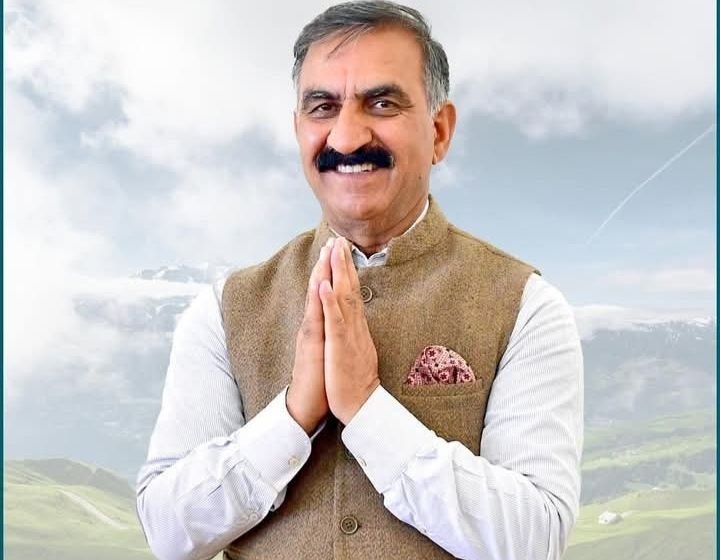
Chief Minister Thakur Sukhvinder Singh Sukhu stated that the government remains committed to ensuring equal opportunities for every section of society, particularly those facing social and economic disadvantages. He said that several welfare-oriented initiatives launched by the government are helping vulnerable children and women lead more secure and dignified lives.
The Chief Minister emphasized that the additional financial resources generated through the Green Panchayat Initiative would further strengthen support systems for orphans and widows. He expressed confidence that enhanced assistance would improve their economic condition, create new opportunities for employment and self-employment, and contribute to their long-term social and financial empowerment.
Policy experts have described the revised model as an innovative approach that links renewable energy development with community welfare. By directing a portion of green energy revenues towards social assistance programmes, the state is attempting to create a development framework where environmental progress and human welfare move forward together.
As solar projects begin generating revenue across the selected Gram Panchayats, the initiative is expected to emerge as a model for integrating clean energy, rural development, and social justice into a single sustainable governance framework.