
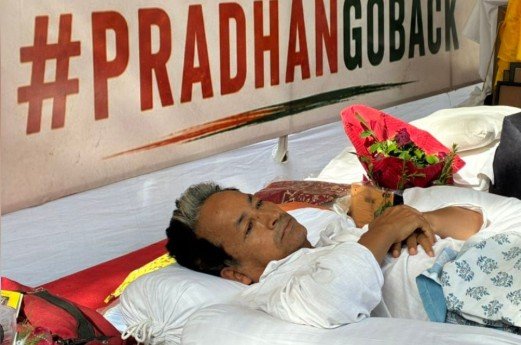
A group of leading public intellectuals, artists, economists and social activists has appealed to the protesters staging an indefinite hunger strike at Delhi’s Jantar Mantar to end their fast, while firmly reiterating support for their campaign demanding the resignation of Union Education Minister Dharmendra Pradhan.
In a joint appeal released on Monday, the signatories praised the protesters for sustaining a peaceful democratic movement centred on issues affecting students and young people across the country. At the same time, they voiced growing concern over the rapidly deteriorating health of those observing the hunger strike, warning that the prolonged protest could have serious medical consequences if immediate attention is not given to their condition.
The statement described the protesters’ determination and commitment as an inspiration, saying their campaign had emerged as a significant expression of democratic resistance. According to the signatories, the movement represents a larger struggle for accountability and educational justice, making it essential that its leadership remains healthy enough to continue guiding the campaign.
Appealing directly to the hunger strikers, the group urged them to withdraw the indefinite fast without abandoning the larger movement. They argued that social and political struggles often require sustained public engagement over an extended period, and preserving the health of those leading the campaign would strengthen the cause rather than weaken it.
The appeal noted that the movement had already demonstrated remarkable resilience and had succeeded in drawing national attention to its demands. It emphasised that the campaign should now continue through broader public mobilisation instead of risking irreversible health complications for those participating in the fast.
The intervention comes as the protest at Jantar Mantar entered its twenty-fourth day, with educator and climate activist Sonam Wangchuk completing sixteen days on an indefinite hunger strike. Organisers of the agitation said Wangchuk’s health has shown signs of significant strain during the course of the fast.
According to medical updates shared by the organisers, Wangchuk has reportedly lost more than eight kilograms since beginning the hunger strike. His latest health readings indicated falling blood glucose levels along with blood pressure that continues to be closely monitored by doctors and volunteers attending the protest site.
The situation became more serious on Monday after student activist Deepak, associated with the All India Students’ Association (AISA), was shifted to Ram Manohar Lohia Hospital when his health deteriorated following several days without food. Fellow protesters described the incident as a reminder of the physical risks involved in the continuing agitation.
The joint appeal also expressed disappointment over what the signatories described as the government’s failure to engage meaningfully with the protesters’ concerns. They argued that prolonged silence from the authorities was increasing anxiety among participants and supporters while allowing the health crisis at the protest site to deepen.
Beyond urging the hunger strikers to protect their health, the statement called upon citizens, particularly residents of Delhi, to participate in a proposed march to Parliament on July 20. The march is scheduled to coincide with the beginning of Parliament’s Monsoon Session and is expected to serve as the next major phase of the campaign.
Supporters believe the demonstration will broaden public participation and bring renewed attention to the issues raised by the protesters. Organisers have maintained that the movement will continue through peaceful and democratic means, regardless of whether the hunger strike is withdrawn.
The appeal was endorsed by a number of prominent personalities from diverse fields, including author Arundhati Roy, actors Naseeruddin Shah and Ratna Pathak Shah, economist Jayati Ghosh, academics Anuradha Chenoy, Nivedita Menon, Tanika Sarkar and Aditya Nigam, filmmaker Sanjay Kak, activist Lalita Ramdas, Kavita Srivastava, feminist Madhu Bhushan and cultural practitioner Arundhati Ghosh.
Their collective intervention reflects growing concern within sections of civil society over both the health of the protesters and the broader questions being raised through the ongoing movement. While reaffirming solidarity with the protesters’ demands, the signatories stressed that preserving the lives and well-being of those leading the campaign is essential for sustaining what they described as a long-term democratic struggle.
This is a web-generated news report based on publicly available information and has been independently rewritten for originality and editorial clarity.