
Himachal Pradesh Leader of Opposition and former Chief Minister Jai Ram Thakur has used the conclusion of the Panchayati Raj election process to sharpen his attack on the Sukhvinder Singh Sukhu government, arguing that the local-body verdict has strengthened the BJP’s campaign ahead of the next Assembly election.
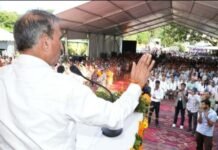
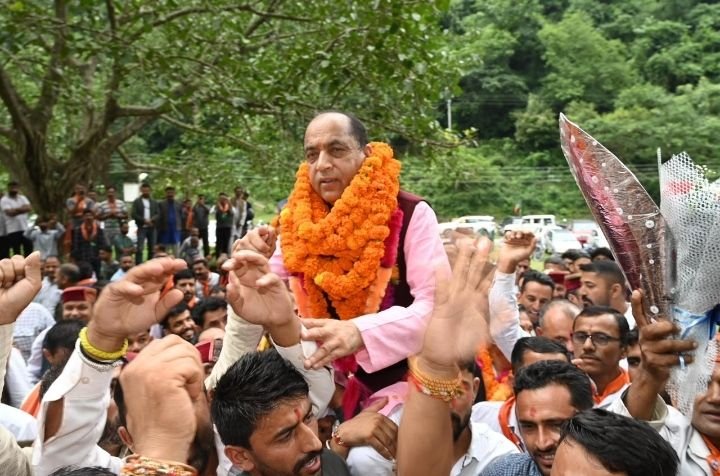
Addressing a gathering to felicitate newly elected Panchayati Raj representatives, Thakur congratulated the winners and reminded them that heading a panchayat was not merely a political position but a significant responsibility towards the people. He expressed confidence that the newly elected representatives would discharge their responsibilities with sincerity, dedication and integrity.
But the political message of his address went well beyond the newly elected representatives.
Thakur accused the state government of attempting to delay the Panchayati Raj elections because, according to him, the Chief Minister was aware that the results could go against the Congress. He said the BJP had been forced to approach the courts to ensure that the elections were held.
The dispute over the timing and conduct of the local-body elections had already reached the courts. In February, the Supreme Court directed the authorities concerned to complete the pending election-related process by March 31 so that the polls could be completed before May 31.
The BJP leader has subsequently made the issue a central part of his criticism of the Sukhu government. In earlier statements, Thakur alleged that the government had used administrative and procedural measures to delay the polls, while the Congress government has had its own explanations for the election process and its timing.
For Thakur, however, the issue is fundamentally about the role of village institutions in Himachal’s democracy.
He described panchayats as the strongest grassroots link in the democratic system and alleged that delaying their elections weakened that system. With elected representatives now in office, he said the BJP would take the government’s record directly to voters before the next Assembly election.
Thakur’s political strategy is increasingly centred on converting local election results into a broader assessment of the Congress government’s performance.
In July, after BJP-backed candidates secured victories in several local bodies, Thakur claimed the results reflected growing dissatisfaction with the Sukhu government. The Congress has rejected such interpretations and has pointed to its own performance in local elections.
The BJP leader’s latest remarks suggest that the party intends to use the coming period to build its organisation from the village level upwards. Newly elected panchayat representatives are likely to become an important part of that political network as both major parties prepare for the next Assembly contest.
Thakur said BJP workers would approach voters in a united manner and place before them what he described as the government’s failures and the gap between promises made to the electorate and their implementation.
He also framed the next Assembly election as an opportunity to complete what he called unfinished work from the previous election. The BJP, he said, would campaign with greater unity and commitment.
The political contest is therefore moving beyond the question of who controls individual panchayats. For the BJP, the local elections have become a platform to test its organisational strength across Himachal and to build a narrative around governance, public expectations and the performance of the Sukhu administration.
Thakur has already used local-body results in this manner. In June, he said the BJP’s performance in Panchayati Raj institutions and urban local bodies had sent a political message to the Congress government.
The BJP’s campaign has also increasingly focused on alleged administrative interference after the elections. Thakur has accused the government of attempting to influence elected representatives through administrative pressure and has said the party would consider legal action where necessary. These remain allegations made by the Opposition and have been disputed by the ruling side.
The broader political significance of the developments will depend on how effectively both parties translate local-body support into an Assembly-level organisation. Panchayat elections are fought on intensely local issues and their results cannot automatically be treated as a direct forecast of a state-wide Assembly election.
For Thakur, however, the message is clear: the BJP intends to make the grassroots verdict a central part of its political campaign in Himachal Pradesh.
At the event, BJP state president Dr Rajeev Bindal, former MLA Baldev Tomar, district BJP president Dheeraj Gupta, Sri Renuka Ji MLA Narayan Singh and other party office-bearers and workers were present.
The next phase of the political contest will now shift from the panchayat level to the larger question of governance in Himachal Pradesh, with Thakur positioning himself as the principal Opposition voice challenging the Sukhu government.